


Jewelry Copper Compression Spring
Get Latest Price| Payment Type: | L/C,T/T,D/P,Paypal,D/A |
| Incoterm: | FOB,EXW |
| Min. Order: | 1 Piece/Pieces |
| Transportation: | Ocean,Land,Air,Express |

| Payment Type: | L/C,T/T,D/P,Paypal,D/A |
| Incoterm: | FOB,EXW |
| Min. Order: | 1 Piece/Pieces |
| Transportation: | Ocean,Land,Air,Express |
Copper Jewelry Spring

A copper jewelry spring is a miniature, elastic metal component used in the structure of jewelry and ornaments, primarily in necklace clasps, bracelet clasps, earring clasps, and various openable and closable jewelry structures. Its core function is to provide stable rebound force and reliable closing force within a very small space, making the jewelry easy to operate during daily wear and less prone to accidental dislodging.
In jewelry structure design, although these springs are tiny, they directly affect the smoothness and safety of the user experience, and are therefore often considered one of the key functional components in the connection structure.
Structure and Working Principle

Copper jewelry springs are typically made of copper or copper alloy wire processed into a miniature spring structure, achieving opening and closing control through elastic deformation. When the user presses or pulls the clasp, the spring compresses or rebounds, thus opening and closing the jewelry.
This structure appears simple, but in reality, it requires high precision in dimensional accuracy and elastic force control. If the elastic force is too strong, it will lead to difficulty in opening and closing; if the elastic force is too weak, there is a risk of dislodging. Therefore, the design process requires precise matching based on the specific weight of the jewelry, the clasp method, and the frequency of use.
Product Features

The design focus of copper jewelry springs is "lightweight + stable elasticity + wearing comfort."
Firstly, in terms of material selection, copper and copper alloys have excellent plasticity and elasticity, while also possessing a certain degree of corrosion resistance, making them ideal for jewelry structures worn close to the skin for extended periods. Compared to ordinary steel springs, copper is also softer in appearance and feel, avoiding a harsh sensation for the user.
Secondly, in terms of structural design, these springs typically employ miniaturization processes to fit into the extremely limited space inside the jewelry. While ensuring functionality, they minimize volume, resulting in a more refined overall structure.
Finally, in terms of user experience, the elastic design is usually "smooth," ensuring easy and natural opening and closing while maintaining sufficient locking force to prevent accidental loosening during wear.
Technical Specifications
| Item | Specification |
| Material | Copper / Copper Alloy (Brass / Phosphor Bronze optional) |
| Wire Diameter | 0.05 mm – 1.0 mm (Customizable) |
| Surface Treatment | Polishing / Nickel Plating / Gold Plating / Anti-oxidation Coating |
| Elastic Grade | Light / Medium (Customizable) |
| Manufacturing Process | Precision Micro Forming |
| Application | Jewelry / Accessories / Wearable Products |
| Corrosion Resistance | Good (depends on surface treatment) |
| Service Life | Depends on usage frequency and design |
Applications

Copper jewelry springs are mainly used in the structure of various jewelry and fashion accessories, and are an important component of the jewelry clasp system.
In necklace and bracelet structures, they are responsible for achieving the elastic closure of the clasp, ensuring safety and convenience during wear. In earring design, they are often used in concealed clasp structures, making the appearance simpler while improving wearing stability.
Furthermore, in some custom jewelry or high-end ornaments, these springs are also used in complex opening and closing structures. Through a micro-elastic system, they achieve precise mechanical control, balancing functionality and design.
Design and Manufacturing Characteristics

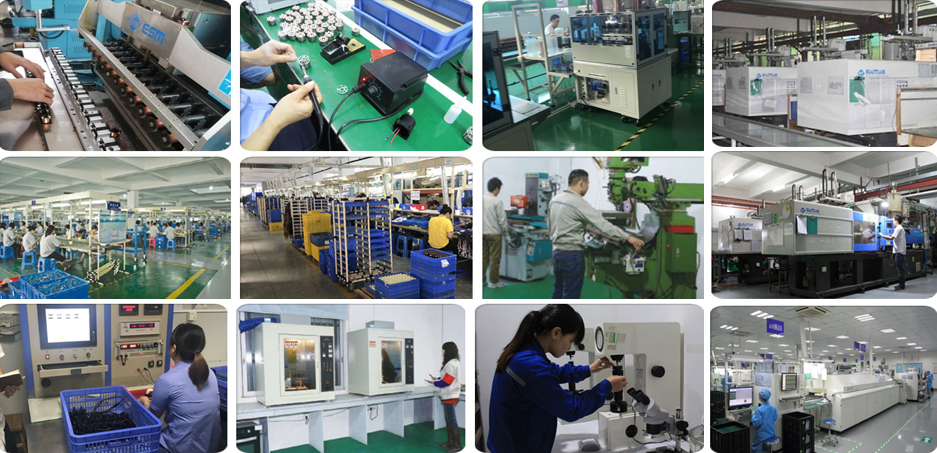
The manufacturing process of copper jewelry springs requires high precision and typically employs micro-molding techniques. During production, strict control over wire diameter tolerances, spring coil count, and rebound consistency is crucial to ensure stable performance in every batch.
For surface treatment, polishing, nickel plating, or gold plating are commonly used to enhance the appearance and reduce the risk of oxidation. This is especially important for ornaments that come into direct contact with the skin.
In actual development, customized designs are needed to complement the ornament's structure, such as the fastening angle, elasticity range, and installation method, to ensure overall structural harmony.
Industry Application Cases (Reference)

Based on common design schemes in the jewelry manufacturing industry, copper jewelry springs are widely used in handcrafted jewelry brands, customized luxury jewelry, and OEM jewelry processing. In some high-end jewelry designs, designers optimize the wearing experience by adjusting the spring structure, making the opening and closing action smoother and more natural, while ensuring long-term stability.
This type of structure is commonly used in the European and American jewelry markets. Related design concepts can also refer to international jewelry structural standards, such as the Jewelers of America's basic requirements for jewelry structural safety: https://www.jewelers.org
FAQ
Q1: Will copper jewelry springs oxidize easily?
Untreated copper may oxidize, but nickel plating, gold plating, or anti-oxidation treatments can effectively improve durability.
Q2: Can different spring strengths be customized?
Yes, the spring strength can be controlled by adjusting the wire diameter, number of coils, and material according to the jewelry structure and usage requirements.
Q3: Is it suitable for high-end jewelry?
Yes, it is, especially in the construction of affordable luxury or custom jewelry, balancing functionality and aesthetics.
Summary
Although small in size, copper jewelry springs play a crucial role in the overall jewelry structure, providing connection and control. It not only affects the safety of the jewelry but also directly relates to the smoothness of the wearing experience. Through reasonable structural design and material selection, a better balance can be achieved between aesthetics and functionality.
Call to Action
If you are developing jewelry or accessories and require stable and reliable micro-elastic structural components, you can customize development based on drawings or samples. We can provide solutions and support from design to mass production.

Privacy statement: Your privacy is very important to Us. Our company promises not to disclose your personal information to any external company with out your explicit permission.














 Contact Now